Skip to content
Dust Front RTS Guide
Menu

Wreck recovery and support: what is measured: Wreck recovery and support: what is measured

Checked: — build 26104922

Current support values can be compared on the repair-unit pages. File values do not establish a recovery window or an in-game corpse yield. Keep the dated developer account separate from the older replacement-cost examples.

Requirements / Minerals
300
Requirements / Population
20
Requirements / Production time, seconds
25.0
Defence / Base hit points
800
Defence / Extra capacity
60
Defence / Front armour
25
Defence / Side and rear armour
25
Defence / Directional armour flag
no
Defence / Fire resistance value
1.0
Defence / Gas resistance value
1.0
Defence / Area resistance value
0.5
Defence / Total hit-point capacity
860
Support / 1 / Amount per support cycle
25
Support / 1 / Cycle, seconds
1.0
Support / 1 / Range
20
Support / 1 / Target type
Infantry
Support / 2 / Amount per support cycle
15
Support / 2 / Cycle, seconds
1.0
Support / 2 / Range
30
Support / 2 / Target type
Vehicles

Some parameters and links remain uncertain. A missing value here does not establish absence of a game mechanic.

Unreadable objects and an unresolved ability link prevent treating this as a complete measurement of every mechanic.

The historical text is retained below — build 23882143. The following dates and values belong to their own source.

The historical edition is retained below — build 23882143

Corpses, wrecks and salvage: what each faction leaves behind

Nothing on this battlefield simply disappears. The developer built a different afterlife for each faction — the mutants harvest their own dead, and the Empire brings its super-heavy vehicles back.

“The mechanics and features of wrecks differ depending on the faction.” That single line from the announcement of 10 February 2026 is the whole of this system, and the two examples he gives sit at opposite ends of what a faction can be.

For the mutants, the dead are a resource. “mutant corpses spawn flies—a free but weak unit that can effectively attack enemy units of any type. Some corpses can create swarms of worms in large numbers, essentially serving as the mutant faction’s standard infantry.” Read that twice: their basic infantry can be generated by fighting. The economics of the roster agree — the two cheapest units in the entire demo are both mutant, at 5 and 15 minerals, and no other faction comes near.

That changes what killing a mutant army means. Destroying mutant units can leave a continuing threat on the battlefield. Against the mutants, a long grinding fight in one place is feeding the opponent, and the longer it lasts the more it feeds them.

The Empire’s version is the mirror image, and it is about money rather than numbers: “the Industrial Empire’s vehicle wrecks stand out for their ability to restore destroyed super-heavy vehicles using a special repair unit, and preserving these expensive machines.” The Empire does not get free bodies. It gets its investment back.

That is why the Empire fields two dedicated repair vehicles when nobody else fields any, and why they are worth protecting. A destroyed Dreadnought costs 700 minerals, 50 gears and ninety seconds to replace from scratch. A wreck plus a repair vehicle is a different proposition entirely — and it is the reason an Empire player should be reluctant to give up ground where their heavy vehicles died.

The practical reading is the same for both sides, from opposite directions. Where a fight happens matters as much as whether you win it. Win on your own ground and the wreckage is an asset; win on theirs and you have handed a mutant opponent their next wave.

We have not established the in-game spawn yield or recovery window from the extracted data. Corpse-related components do contain serialized spawn parameters, but their runtime meaning has not been verified here. The mechanic is confirmed by the developer’s own words, and the costs above are read from build 23882143.

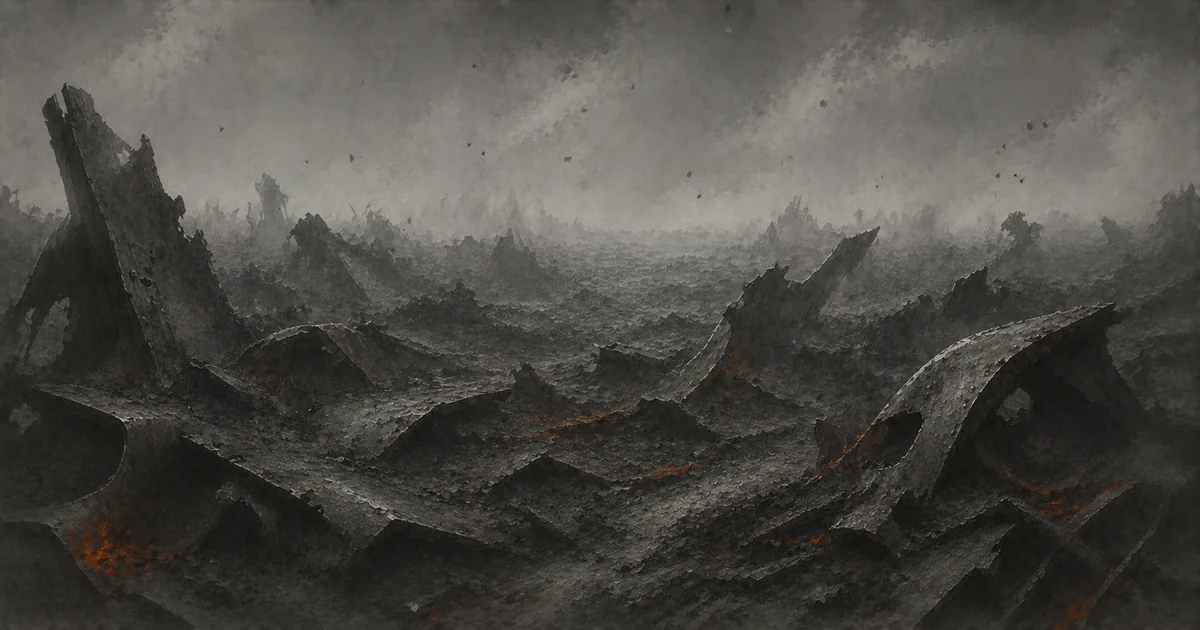
Original artwork for Wreck recovery and support: what is measured — ⛔ an illustration made for this site, not a screenshot of the game

Wreck recovery and support: what is measured

Nothing on this battlefield simply disappears. The developer built a different afterlife for each faction — the mutants harvest their own dead, and the Empire brings its super-heavy vehicles back.

Confirmed Updated · numbers from version 23882143

Original artwork made for this site — not a screenshot of the game

“The mechanics and features of wrecks differ depending on the faction.” That single line from the announcement of 10 February 2026 is the whole of this system, and the two examples he gives sit at opposite ends of what a faction can be.

For the mutants, the dead are a resource. “mutant corpses spawn flies—a free but weak unit that can effectively attack enemy units of any type. Some corpses can create swarms of worms in large numbers, essentially serving as the mutant faction’s standard infantry.” Read that twice: their basic infantry can be generated by fighting. The economics of the roster agree — the two cheapest units in the entire demo are both mutant, at 5 and 15 minerals, and no other faction comes near.

That changes what killing a mutant army means. Destroying mutant units can leave a continuing threat on the battlefield. Against the mutants, a long grinding fight in one place is feeding the opponent, and the longer it lasts the more it feeds them.

The Empire’s version is the mirror image, and it is about money rather than numbers: “the Industrial Empire’s vehicle wrecks stand out for their ability to restore destroyed super-heavy vehicles using a special repair unit, and preserving these expensive machines.” The Empire does not get free bodies. It gets its investment back.

That is why the Empire fields two dedicated repair vehicles when nobody else fields any, and why they are worth protecting. A destroyed Dreadnought costs 700 minerals, 50 gears and ninety seconds to replace from scratch. A wreck plus a repair vehicle is a different proposition entirely — and it is the reason an Empire player should be reluctant to give up ground where their heavy vehicles died.

The practical reading is the same for both sides, from opposite directions. Where a fight happens matters as much as whether you win it. Win on your own ground and the wreckage is an asset; win on theirs and you have handed a mutant opponent their next wave.

We have not established the in-game spawn yield or recovery window from the extracted data. Corpse-related components do contain serialized spawn parameters, but their runtime meaning has not been verified here. The mechanic is confirmed by the developer’s own words, and the costs above are read from build 23882143.

Values read from game files · version 23882143

← All guides