Every upgrade in the build carries a flag saying whether it is global. Twenty are; nineteen are not. The split is not a reading of ours — it is written in the data, and it lines up exactly with the naming: the nineteen local upgrades all share the same identifier suffix.
The local nineteen are small and fast. They cost between 50 and 250 minerals, and every single one records a build time, between 3 and 10 seconds. These are the modifications you order on a specific piece: a harvester gun at 50 minerals and three seconds, a trenching kit at 120 and six, a moving-repair kit at 250 and five. Nothing here is a strategic commitment. They are cheap enough to buy when you need them and quick enough that the timing rarely matters.
The global twenty are a different decision entirely. They run from 500 minerals up to 3 000, and not one of them records a build time at all — on paper they are instant. The two at the top are the Macroeconomics doctrine and Tactical missiles, both at 3 000, and both are the sort of thing you commit to once in a game.
The detail that changes how you plan is buried in the price blocks: five of the twenty global upgrades also cost population. The Assault, MLRS and Siege doctrines take 100 each; Mobile headquarters and Prototypes take 50. That is not a fee, it is supply you no longer have for units. An Assault doctrine at 2 000 minerals and 100 population takes more supply than the heaviest vehicle in the game, which costs 60.
The other fifteen global upgrades cost minerals only, and they cluster in bands you can plan around: four sit at exactly 1 000 — Bunkers and the three turret doctrines — while five sit at 500, which makes them the natural first purchases of a game.
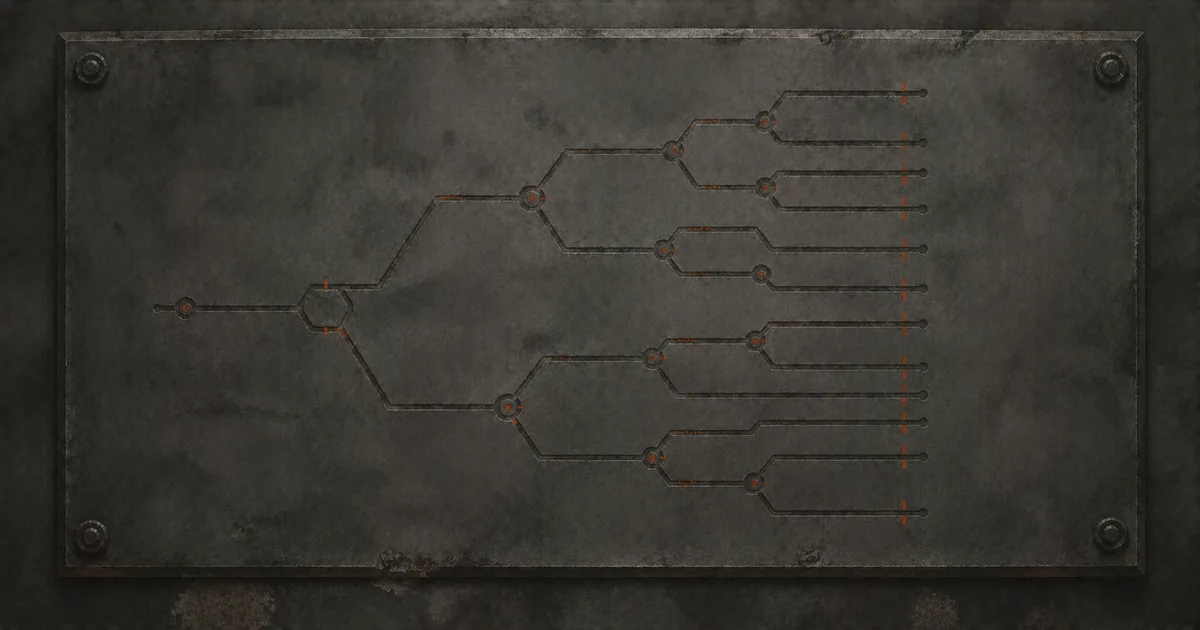
⭐ And the files do give you the order, which is the part this page exists for. Every upgrade carries an industry branch and a level inside it, and the three branches are cleanly separated.
The nineteen local upgrades all sit in one branch, all at level 0 — they gate nothing and nothing gates them. The global twenty split into two real ladders of three levels each, plus two entries on their own.
The first ladder opens with three doctrines at 500 minerals apiece — Cleansing, Support and Tank. Its middle rung holds four, from a 500-mineral maintainability upgrade up to MLRS at 1 500. Its top rung holds two: the Siege doctrine at 1 500 and the Assault doctrine at 2 000, the latter also costing 100 population.
The second ladder opens with four at exactly 1 000 — Bunkers and the three turret doctrines. Its middle rung holds three, from an emergency harvester call at 500 to the Repair Expansion at 2 000. Its top rung holds the two most expensive upgrades in the game, both at 3 000: Macroeconomics and Tactical missiles.
⭐ Read across the levels and the design is plain: within each ladder the price rises with the rung, and the two ladders top out at 2 000 and 3 000 respectively. If you are asking what to buy first, the answer the data gives is the level-0 entries of whichever ladder you intend to finish — 500 minerals for the military one, 1 000 for the defensive one.
The two outliers sit in a branch of their own: Barracks towers at 800 on the lower rung, Armoured infantry at 1 300 on the upper one.
⛔ What the files still do not tell us is what most of these upgrades actually change. The majority record a name, a description, a price and a place in the tree, and nothing that links them to a specific unit entry. Where a link exists we say so on the upgrade’s own page; where it does not, we say that too. We would rather leave a gap than fill it with a plausible guess.
All figures read from build 23882143, counted across all thirty-nine entries.
Values read from game files · version 23882143